

ある直線 ax + by + c = 0; との交点が得られても、 その交点が2点の間にあるかを知るのは面倒なのではないかと思った。
考えてみて、このような方法を思いついた。

点A を原点とし、 点B に向かう直線を x軸としたローカル座標系を考える。
この座標系で、ベジエ曲線の y座標の式は、直線との距離を意味し、 x座標の式は、最も近い直線上の位置を意味する。

yの式が 0 で、 x の式が 0以上 、 AB の長さ以下なら、 交点が直線の上にあることになる。
まず、ローカル座標の x軸方向・y軸方向の単位ベクトルを作る

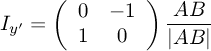
次に、ベジエ曲線の点を、ローカル座標に直す

小さい点は内積の意味。 2つのベクトルの x1 * x2 + y1 * y2 を計算する。
変換したローカル座標を元に、ベジエ曲線の式を作り、解く。->3次方程式を解く
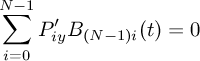

これで、2点を結ぶ直線上に交点があることや、 直線上のどこに交点があるかを知ることが出来そう。
あと、ベジェ曲線の次数を減らせば線分同士の交点も求められる。
[試しに書いてみたソース]
        public float[] intersection_line(PointF pa, PointF pb)
        {
            Vec2D vpta = new Vec2D(pa);
            Vec2D vptb = new Vec2D(pb);

            Vec2D vAB = new Vec2D(pa, pb);

            Vec2D Ix = vAB / vAB.length;
            Vec2D Iy = new Vec2D(-Ix.y, Ix.x);

            Vec2D[] p2 = new Vec2D[4];

            for (int cnt = 0; cnt < 4; cnt++) {
                Vec2D AP = new Vec2D(pa, pts[cnt]);
                p2[cnt] = new Vec2D(
                    Vec2D.inproduct(AP, Ix),
                    Vec2D.inproduct(AP, Iy));
            }

            Complex[] res = MyMath.cubiceq(-p2[0].y + p2[1].y*3 - p2[2].y*3 + p2[3].y,
                 3 * p2[0].y - 2 * p2[1].y*3 + p2[2].y*3,
                -3 * p2[0].y + p2[1].y*3, p2[0].y);

            List res2 = new List();
            foreach (Complex v in res) {
                if (v.imag < 0.0000001) {
                     double xval = (-p2[0].x + p2[1].x * 3 - p2[2].x * 3 + p2[3].x) * Math.Pow(v.real, 3)                                  + (3 * p2[0].x - 2 * p2[1].x * 3 + p2[2].x * 3) * Math.Pow(v.real, 2)                                  + (-3 * p2[0].x + p2[1].x * 3) *  v.real                                  + p2[0].x;                     if (xval >= 0 && xval <= vAB.length && 0 <= v.real && v.real <= 1) //追記
                        res2.Add(v.real);
                }
            }

            float[] result = new float[res2.Count];
            for (int cnt = 0; cnt < res2.Count; cnt++) {
                result[cnt] = (float)res2[cnt];
            }

            return result;
        }
[Vec2D クラス] 適当に作ったベクトルクラス
    struct Vec2D
    {
        public double x;
        public double y;

        public Vec2D(double x, double y)  //constructor
        {
            this.x = x;
            this.y = y;
        }

        public Vec2D(PointF pt)  //constructor
        {
            this.x = pt.X;
            this.y = pt.Y;
        }

        public Vec2D(PointF pa, PointF pb) {
            this.x = pb.X - pa.X;
            this.y = pb.Y - pa.Y;
        }

        //演算子
        public static Vec2D operator +(Vec2D c1, Vec2D c2)
        {
            return new Vec2D(c1.x + c2.x, c1.y + c2.y);
        }

        public static Vec2D operator -(Vec2D c1, Vec2D c2)
        {
            return new Vec2D(c1.x - c2.x, c1.y - c2.y);
        }

        public static Vec2D operator -(Vec2D c1)
        {
            return new Vec2D(-c1.x, -c1.y);
        }

        public static Vec2D operator *(double c1, Vec2D c2)
        {
            return new Vec2D(c1 * c2.x, c1 * c2.y);
        }

        public static Vec2D operator /(Vec2D c1, double c2)
        {
            return new Vec2D(c1.x / c2, c1.y / c2);
        }

        public static double inproduct(Vec2D c1, Vec2D c2) {
            return c1.x * c2.x + c1.y * c2.y;
        }
        public double length
        {
            get{
                return Math.Sqrt( x * x + y * y );
            }
        }
    }
 Programming City